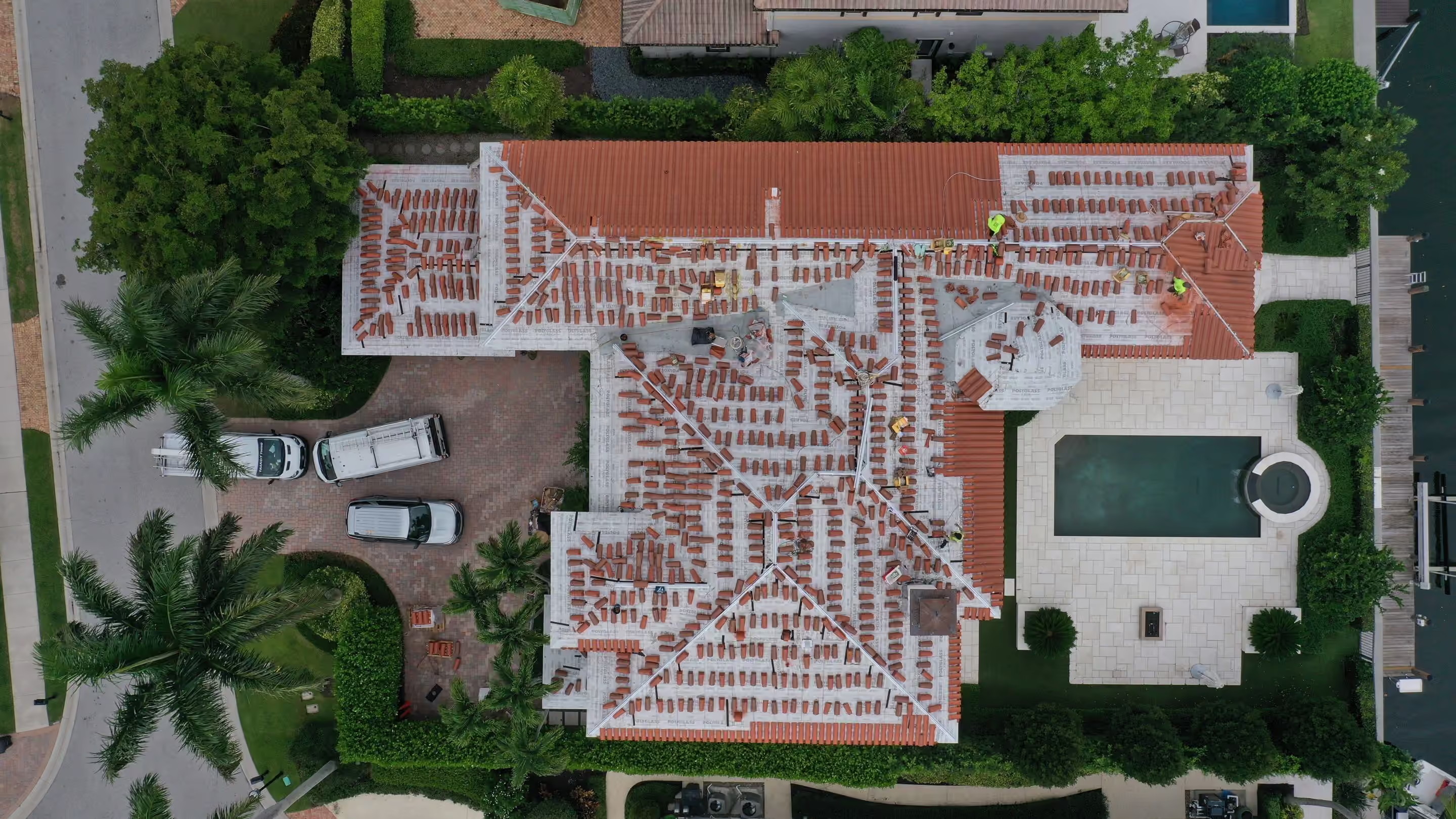
Florida's PACE program for roofing.
PACE is one way to pay for a roof over a number of years. You pay it back on your property tax bill, not in monthly loan payments. The charge becomes a lien on your house.
CCC1335204Reviews
5.0Serving
Palm Beach County
What PACE is.
PACE stands for Property Assessed Clean Energy. In Florida it is a government-authorized program, not a bank product. Your city or county joins a PACE district, a program administrator pays for approved work on your house, and you pay it back through a charge on your yearly tax bill.
The big difference from a normal loan is what gets checked. A lender opens your credit file, and a PACE administrator opens the property record. The administrator looks at the value of the house and the equity behind it, and checks whether the bills against the house get paid on time.
How the money moves.
The assessment
A line on your property tax bill
The cost is added to your yearly property tax bill as a flat charge, not one based on your home value. On the paperwork it is called a non-ad-valorem assessment. Your county tax collector bills it with the rest of your taxes, so there is no separate lender to pay each month.
The schedule
Once a year, not every month
If your mortgage company collects your taxes in escrow, your escrow payment goes up to cover the charge. Call them before the first bill lands.
The security
Attached to the house, not to your name
Because the house secures the debt, the program can look at the house instead of your credit file. Every warning below comes from the debt being tied to the house.
The terms
Set by the program, not by us
Both the length and the rate come from the program, and we cannot change either one. You get them in writing, with your name on the agreement, before you sign.
The contractor
Has to be registered with the program
PACE work has to be done by a contractor the program has registered. Luxe Builder Group is registered, and our team handles the roofing paperwork for the program.
What qualifies, and what gets checked.
Two kinds of work qualify in Florida: work that makes a building tougher against wind, and work that cuts its energy use. A new roof is reviewed under the wind side, and so are impact-rated windows and doors. Many owners do them at the same time as the roof.
On the property side, your house must be in a city or county that has joined a PACE district. Your taxes and any charges already on the bill need to be current, and the mortgage generally does too. You need equity behind the work, because the house is what secures it. None of that is ours to decide. The administrator reviews your property and makes the call.
The roof is the part we control. Design wind speeds along this coast are among the highest in the country. A replacement here is engineered to the wind-uplift standard in the code. That standard is set for coastal Palm Beach County. We use systems carrying Miami-Dade product approvals where the spec asks for them. The engineering submittals and the final wind-uplift certification run through us, no matter how the roof gets paid for.
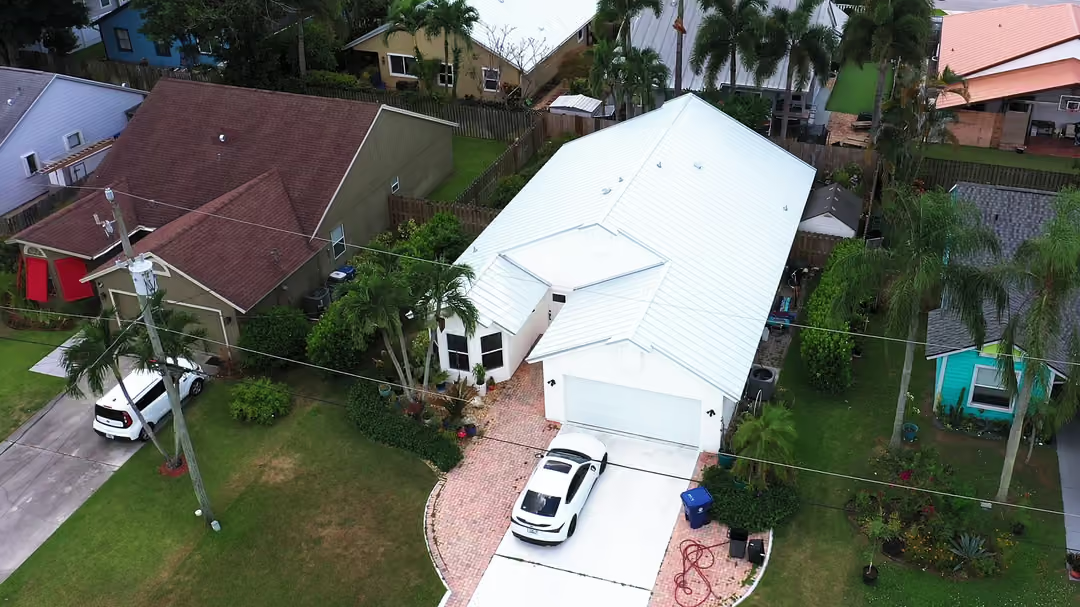
PACE next to a conventional roof loan.
| What is being compared | Florida PACE | Credit-based lending |
|---|---|---|
| What gets reviewed | The house, the equity in it, and its tax record | Your credit file and your income |
| Where the payment lands | Once a year, on the property tax bill | Every month, to the lender |
| What secures it | A charge on the house, ranked the same as your property taxes | Usually just your signature. Most roofing loans put nothing against the house |
| If you sell | Paid off at closing, or taken over by the buyer if everyone agrees | Paid off at closing, out of the sale money |
| If you refinance | Most lenders want it paid off before they write the new loan | A normal payoff, handled at closing |
| Who sets the terms | The PACE administrator, under the program's rules | The lender, from its own rate sheet |
What to watch out for.
PACE works well for some owners and badly for others. These five points usually decide which.
It is a lien
The charge stays with the house
A PACE charge attaches to your house. It ranks with your property taxes, ahead of your mortgage, which is why mortgage lenders care about it.
Selling the house
The balance comes due at closing
You pay off what is left out of the sale money, or the buyer takes it over, as long as the buyer, their lender, and the title company all agree. Most Florida sales end in a payoff, so plan for that.
Your mortgage lender
Some say no, in writing
Fannie Mae and Freddie Mac will not buy a loan that ranks behind a first-lien PACE assessment, so a refinance later can stall until you clear the balance. Plenty of mortgage contracts also bar a lien that outranks the mortgage. Read yours, and call your mortgage company before you sign a PACE agreement.
The total, not the payment
PACE is not automatically the cheaper route
A once-a-year bill can make a bigger lifetime total feel small. Ask the administrator what you repay over the whole term, and put that number next to a regular loan quote for the same roof.
Get your own advice
Not legal or tax advice
We can explain how the program works in Florida, but that is not legal or tax advice about your situation. Before you sign, read the agreement with your own lawyer or financial adviser.
Why no monthly figure appears here.
Roofing ads in Florida run on fixed monthly numbers, and PACE gets advertised that way all the time. That is not how the program works. A PACE charge is repaid once a year, through the property tax bill, so there is no monthly payment to quote.
Any rate or payment we printed here would be a guess. The administrator has not seen your house yet, and neither have we. Real numbers come from your written quote and from the program's own documents, both with your name on them.
Our cost page covers what drives the price of a roof, and our financing page sets out the other ways owners pay. The roof replacement page describes the work itself.
PACE questions we get asked.
- Does a roof replacement qualify for PACE in Florida?
Usually, yes, under the wind side of the program. Florida PACE pays for work that makes a building tougher against wind, and for work that cuts energy use. A new roof falls in the wind group. That is why PACE funds roofing so often in this state.
Your property has to qualify too. It must be in a city or county that has joined a PACE district, with your taxes and mortgage current and enough equity in the house. The administrator makes that call on your property.
- Is there a credit check for PACE?
The program is built to work off the house, not off a credit score. It looks at the equity in the house and checks whether the bills against the house get paid on time. None of that means your property will be approved, and no roofer can promise that it will.
- How does the money get paid back?
Through your yearly property tax bill. The county tax collector charges it with the rest of your taxes.
If your mortgage company collects your taxes in escrow, that payment goes up. Tell them before the first bill arrives.
- What happens to the assessment if I sell?
It gets handled at closing. You can pay the balance out of the sale money, or the buyer can take it over, as long as the buyer, their lender, and the title company all agree. Paying it off is the common outcome in Florida, so read the agreement with a payoff in mind.
- Is PACE cheaper than a conventional roof loan?
Not always. Compare what you repay over the full term against a regular loan quote for the same roof, because a once-a-year bill can hide a higher lifetime cost.